|



Sheep are
raised on both farms and ranches. On ranches they are raised in herds of
1000-2000 sheep. China ranks as the world's leading
sheep-producing country, and Australia ranks second. Other sheep-raising countries include India, Iran, New Zealand, and Russia.
There are more than 800 different breeds of domestic sheep around the world. Sheep
produce wool, meat, and leather. They also furnish the raw materials for many
by-products, such as glue, tallow, suet, soap, fertilizer, cosmetics, soaps,
candles and violin strings.Sheep are gentle, timid, defensless animals.
They do not have front teeth and they do not bite.The average sheep weighs between 150 - 250
pounds and has a lifespan of 13 years. Like horses, sheep are grazers and their diet consists of mostly
grass, woods and shrubs. Sheep can chew grass much closer to the ground
than cattle can. If too many are allowed to graze in an area, plant life may
be severely damaged or ruined.Because they can live without water for longer periods
of time,sheep can be raised on dry plains in remote areas away from cities.
Wool does not spoil so it can be stored and shipped over long distances.
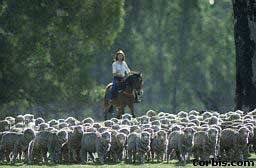
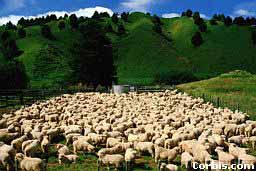
A herd of sheep on a ranch and in a field.
Sheep have been domesticated carefully from their wild ancestors, which
were bred and raised primarily for their hides and milk.The hides were
used for clothing and cheese was made from the milk. Sheep were also used as
beasts of labor, carrying heavy burdens. They became important for their
fleece early in history. The coarse hair that covered wild sheep was replaced
by a soft coat of wool through selective breeding. Breeders primarily
developed the animals for meat only during the past 200 years.
There are five main groups of sheep.They are
classified by their wool: fine wool,
long wool, crossbred wool, medium wool, and coarse wool.Sheep are covered with fleece which is sheared and then
processed. Shearing is usually done once a year, in the spring, with
electric clippers. A full grown sheep yields 8 pounds of wool per shearing.
This amounts to about 4 pounds of wool, after processing.
Processing is done at a mill and consists of washing, scouring and
straightening by a machine The fibers are then spun into yarn. Yarn made out
of wool is used for clothing, blankets, rugs and other fine products.
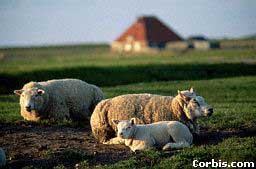
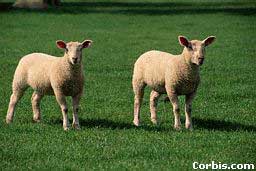
Sheep before and after being sheared.
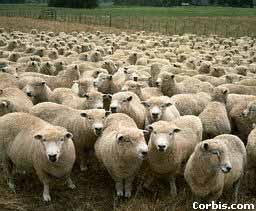
A herd of sheep in New Zealand.

Graphic by
Lalla's Countryside
Lisa's Country Clip Art
Made from the Heart
Country Patch Collectables
Page Design and Content Copyright Cockatiel Cottage.
Copyright Graphics are NOT Public Domain.
|